
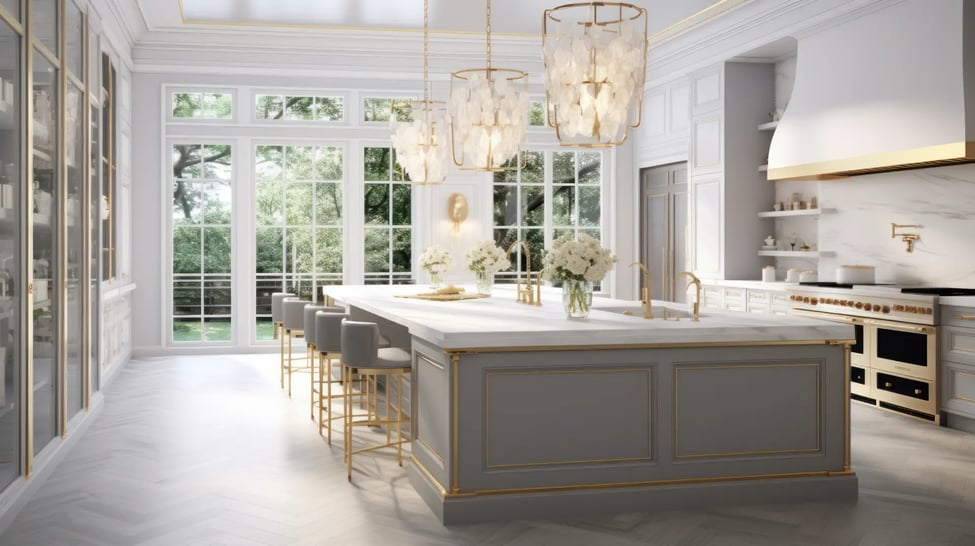
Miami kitchens evolve faster than most markets because Miami isn’t one buyer profile—it’s a collision of them. Local families, relocations from New York and California, international buyers, second-home owners, and serious entertainers all show up with different expectations. The kitchens that win are the ones that feel current without being trendy, and functional without feeling utilitarian.
Here’s what I see changing—and why—in Coconut Grove, Coral Gables, Pinecrest, Brickell, and Miami Beach.
Miami luxury has shifted from “show kitchen” to “operating kitchen.”
Buyers still want beauty, but they’re done with kitchens that look incredible and function poorly. The modern luxury buyer wants:
real storage
smart layouts
durable finishes
seamless indoor-outdoor entertaining
In Pinecrest and Coral Gables, where homes are often built around family life and hosting, the kitchen is expected to run like a command center—quietly efficient, never cramped, never precious.
Materials are getting warmer and more natural.
The glossy all-white kitchen isn’t dead, but it’s no longer the automatic premium signal. Miami buyers are leaning into warmer tones: natural wood, soft stone, matte finishes, and layered lighting. The goal is less “showroom” and more “calm, elevated, and lived-in”—especially in Coconut Grove, where buyers gravitate toward design that feels organic and intentional.
Appliance expectations are rising—but buyers want integration.
Luxury kitchens are now judged on how seamlessly the tech disappears. Panel-ready refrigeration, clean hood lines, hidden outlets, and appliance garages are big. In Brickell and Miami Beach condos, where square footage can be tighter, buyers pay for kitchens that feel streamlined and high-performance without visual clutter.
Layouts are evolving around entertaining, not just cooking.
Miami luxury is social. Kitchens are expected to connect to dining, living, and outdoor areas with ease. The island is still important, but the best layouts create zones: prep, serve, gather. You’ll see more secondary prep areas, sculleries, and walk-in pantries in high-end single-family homes—because buyers want the “front” of the kitchen to stay pristine during hosting.
What’s fading: overly busy design moments.
Heavy contrast, aggressive patterns, and trend-driven lighting can make a kitchen feel dated quickly. Miami buyers are increasingly sensitive to “2020s design language” that’s too loud. The premium is shifting to restraint: fewer statements, better materials, better proportions.
The Miami-specific factor: climate and maintenance.
Humidity, salt air, and daily indoor-outdoor living change what makes sense here. Finishes that stain easily, metals that show wear, and materials that don’t hold up under real use get discounted—especially by buyers who have owned in South Florida before.
Luxury kitchen trends in Miami evolve toward one thing: a kitchen that photographs cleanly, lives effortlessly, and stays relevant.
If you tell me your neighborhood, whether the home is modern or classic, and whether you’re updating to sell soon or for long-term living, I can recommend the kitchen direction that Miami buyers are paying for right now—and what choices tend to date a home faster than you’d expect.